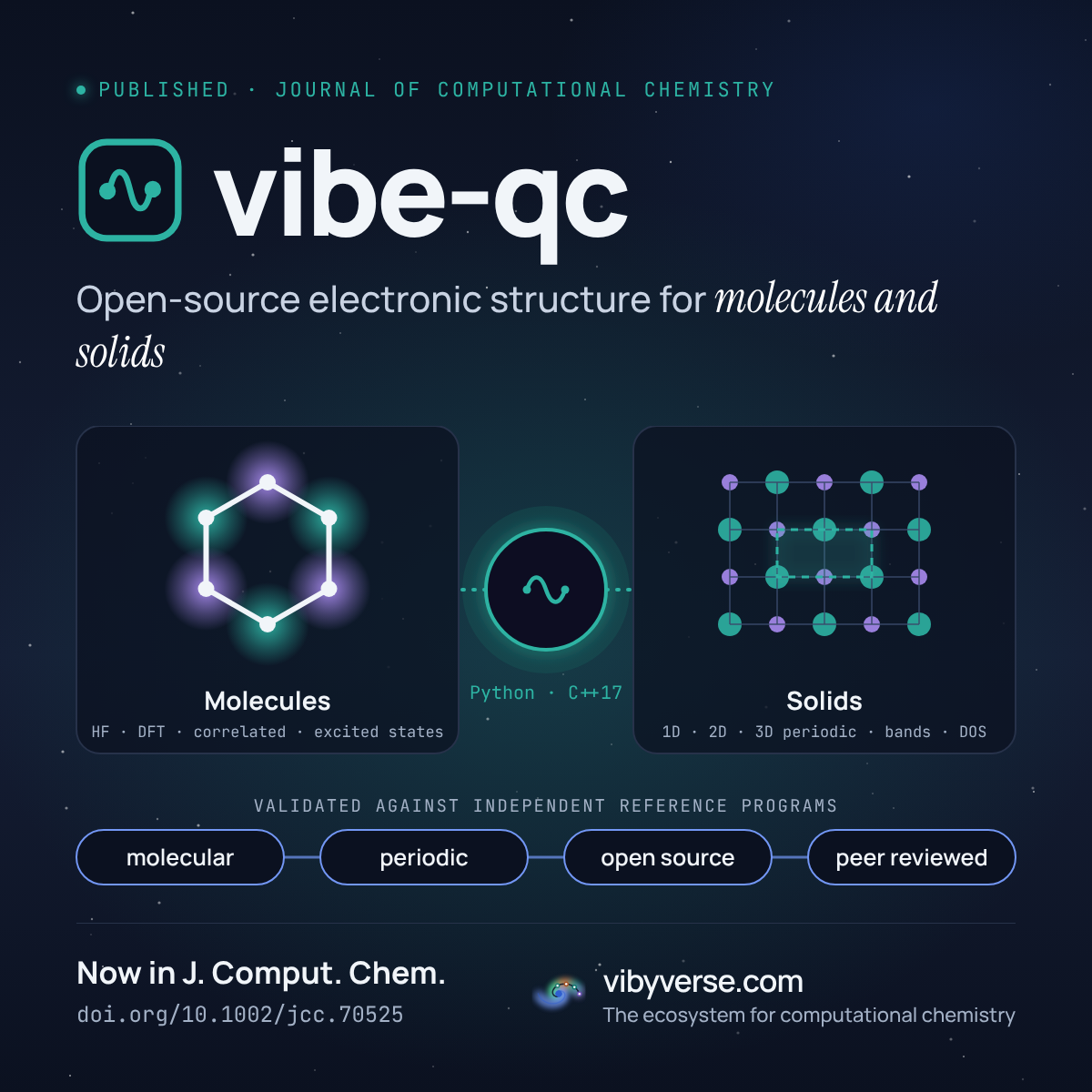
Our paper, “vibe-qc: An Open-Source, General-Purpose Electronic-Structure Code for Molecules and Solids Developed With Generative AI,” is now published in the Journal of Computational Chemistry.
vibe-qc is the calculation engine of the vibyverse. It runs electronic-structure calculations for molecules and for solids that are periodic in one, two or three dimensions, with a Python front end over a C++17 core. Hartree–Fock and DFT sit alongside correlated, excited-state and multireference methods, and each method is labelled by maturity, from production to experimental.
The paper describes these molecular and periodic capabilities and validates them against independent reference programs. It is also open about how the code was built: agentic, AI-assisted engineering under expert scientific direction. Peer review matters to us for exactly that reason. A code developed this way has to earn trust through evidence.
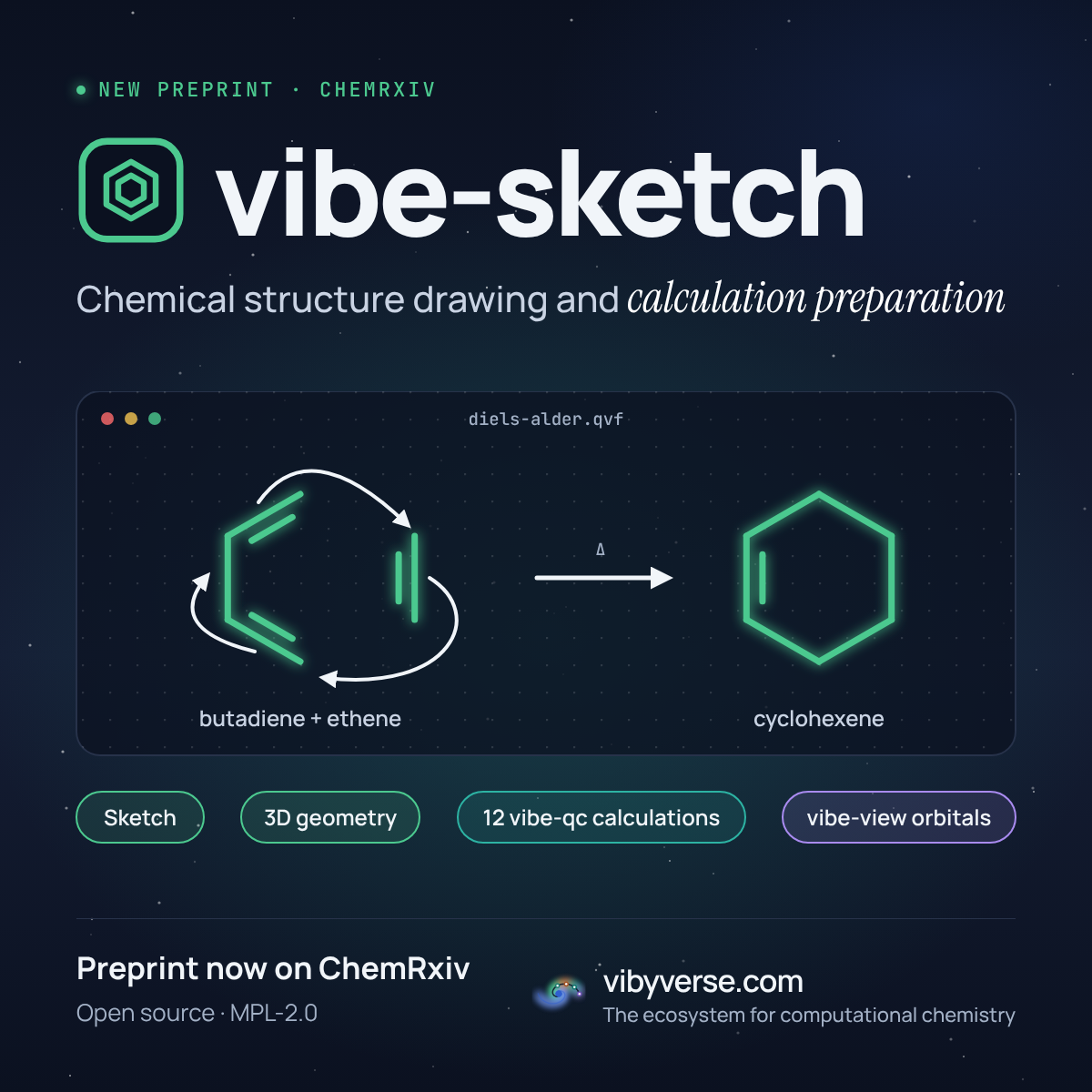
vibe-qc is open source under the MPL-2.0 licence. It works on its own, and together with vibe-sketch, vibe-queue and vibe-view, connected by the qvf format.
Thank you to the editors and reviewers at the Journal of Computational Chemistry.
Ready to go deeper?
Visit the developer hub