vibe-qc is now published in the Journal of Computational Chemistry
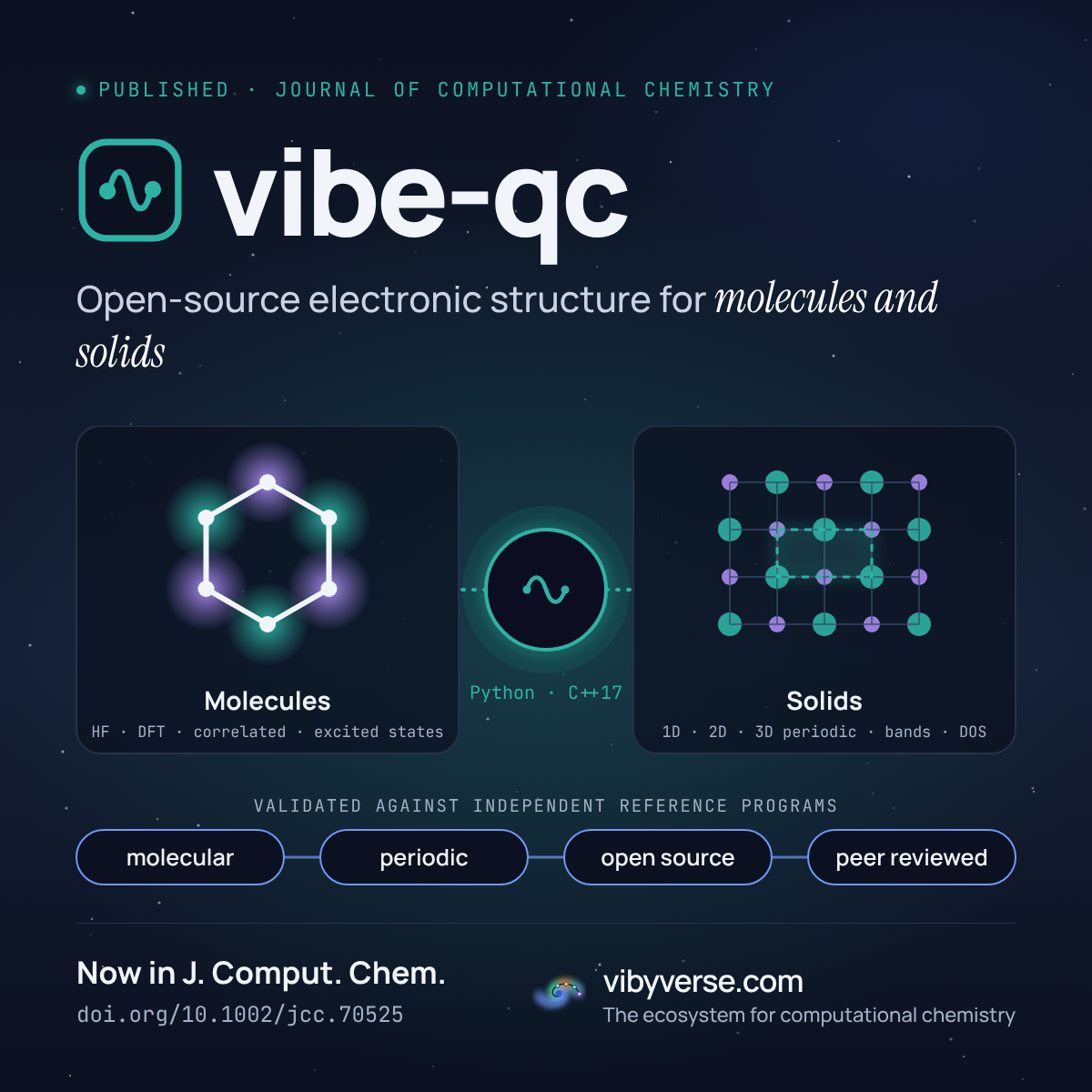
The vibe-qc paper, describing the electronic-structure engine of the vibyverse, is now published in the Journal of Computational Chemistry.
Announcements, releases and technical notes on the vibyverse tools.
The vibe-qc paper, describing the electronic-structure engine of the vibyverse, is now published in the Journal of Computational Chemistry.
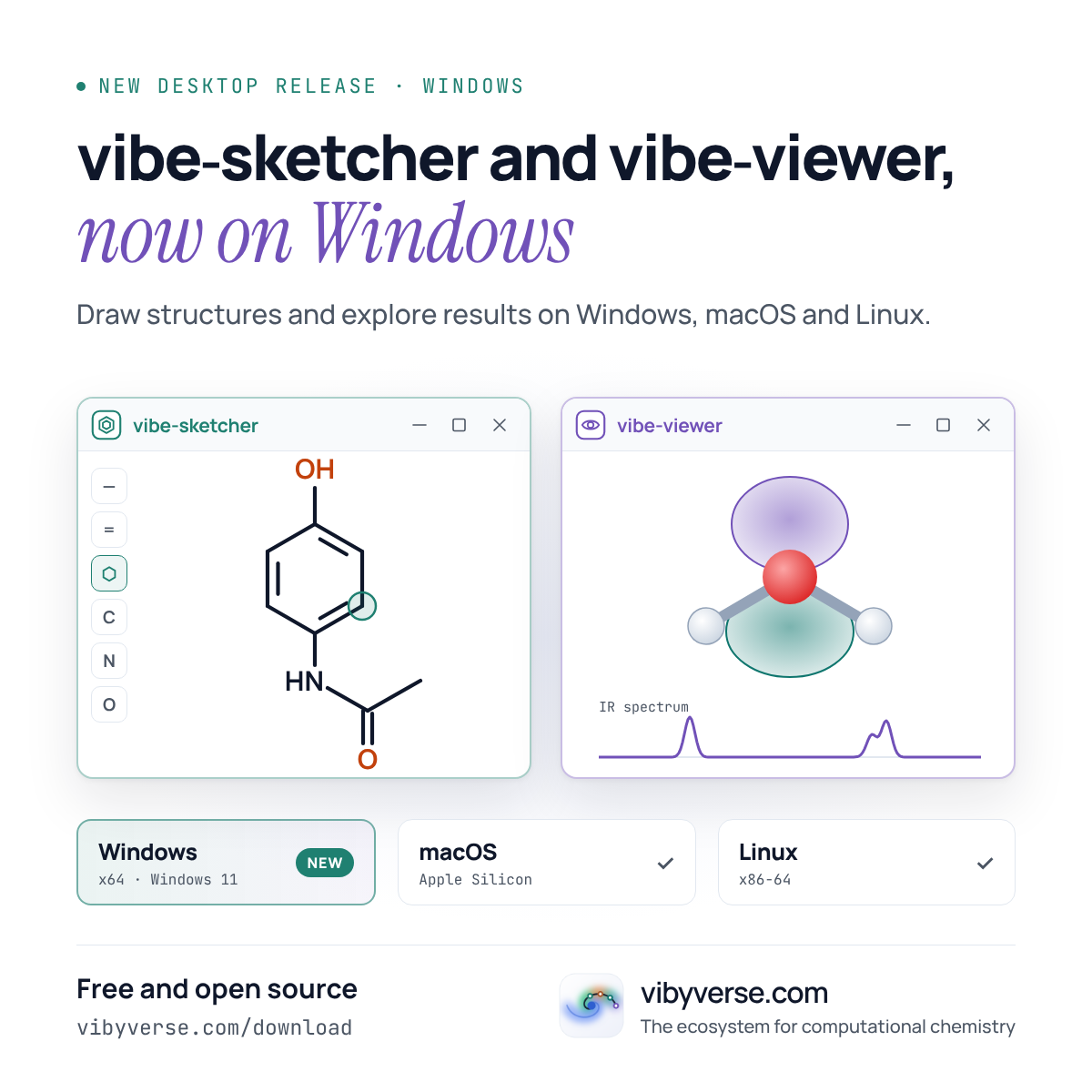
Windows x64 installers for vibe-sketcher and vibe-viewer are now on the download page, tested on Windows 11, alongside the macOS and Linux builds.
A case study of how vibe-qc is developed: the expert sets the problem and interprets the evidence, AI agents implement and execute, and the development records stay traceable.
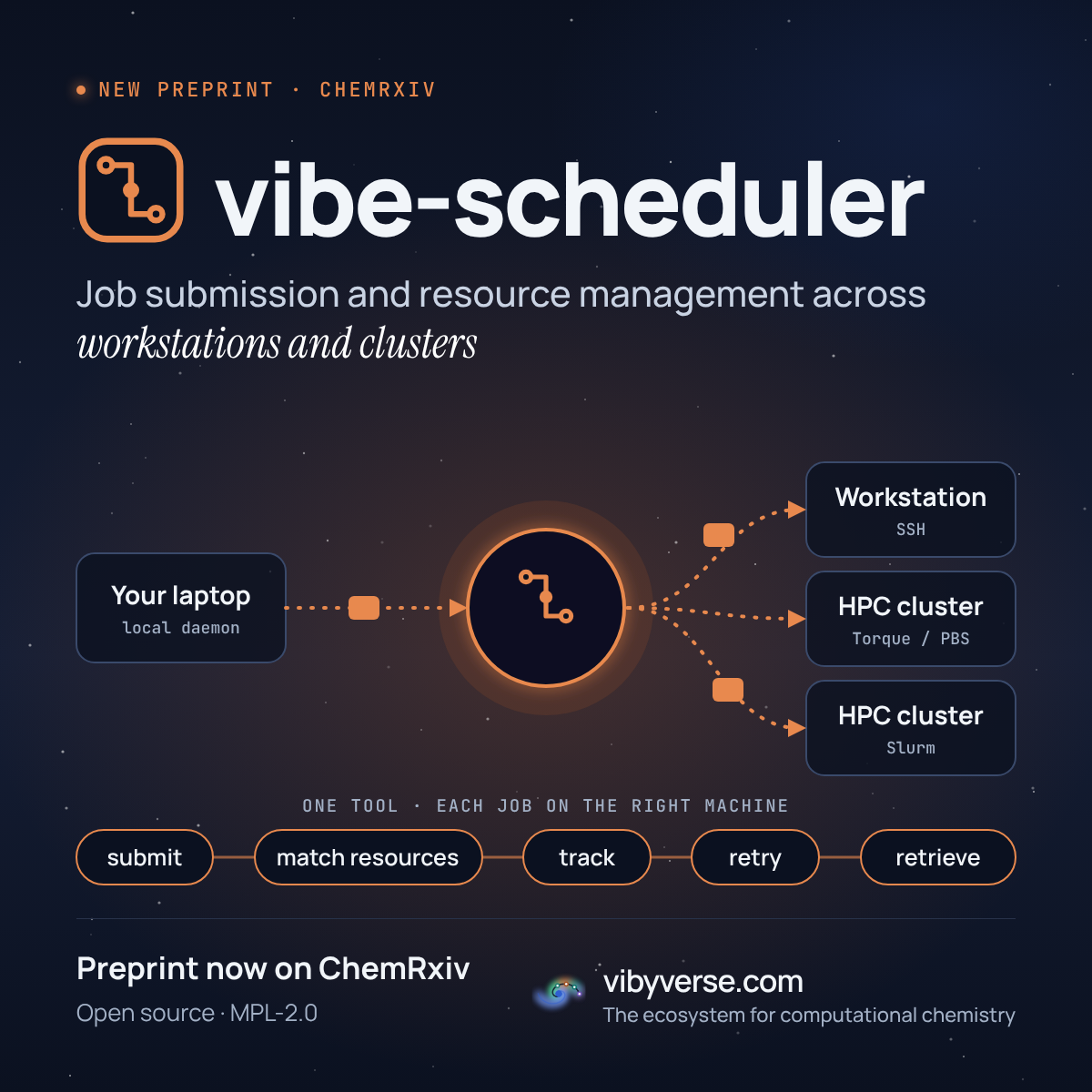
vibe-scheduler submits, tracks and retrieves computational chemistry jobs on workstations, remote machines and Torque/PBS or Slurm clusters. The preprint describing version 1.0.0 is on ChemRxiv.
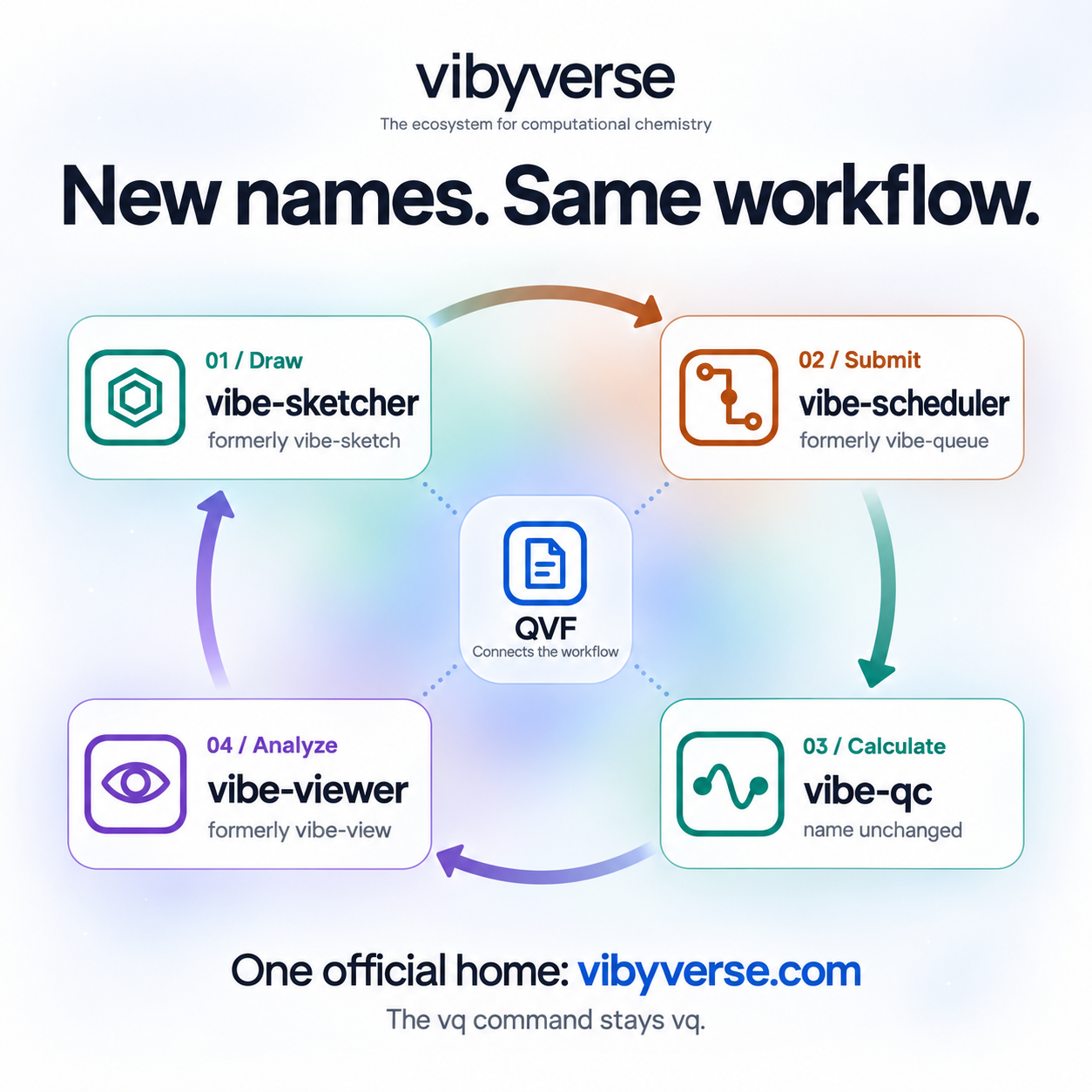
vibe-sketch, vibe-queue and vibe-view are now vibe-sketcher, vibe-scheduler and vibe-viewer. vibyverse.com is the official home for the tools, documentation and news.
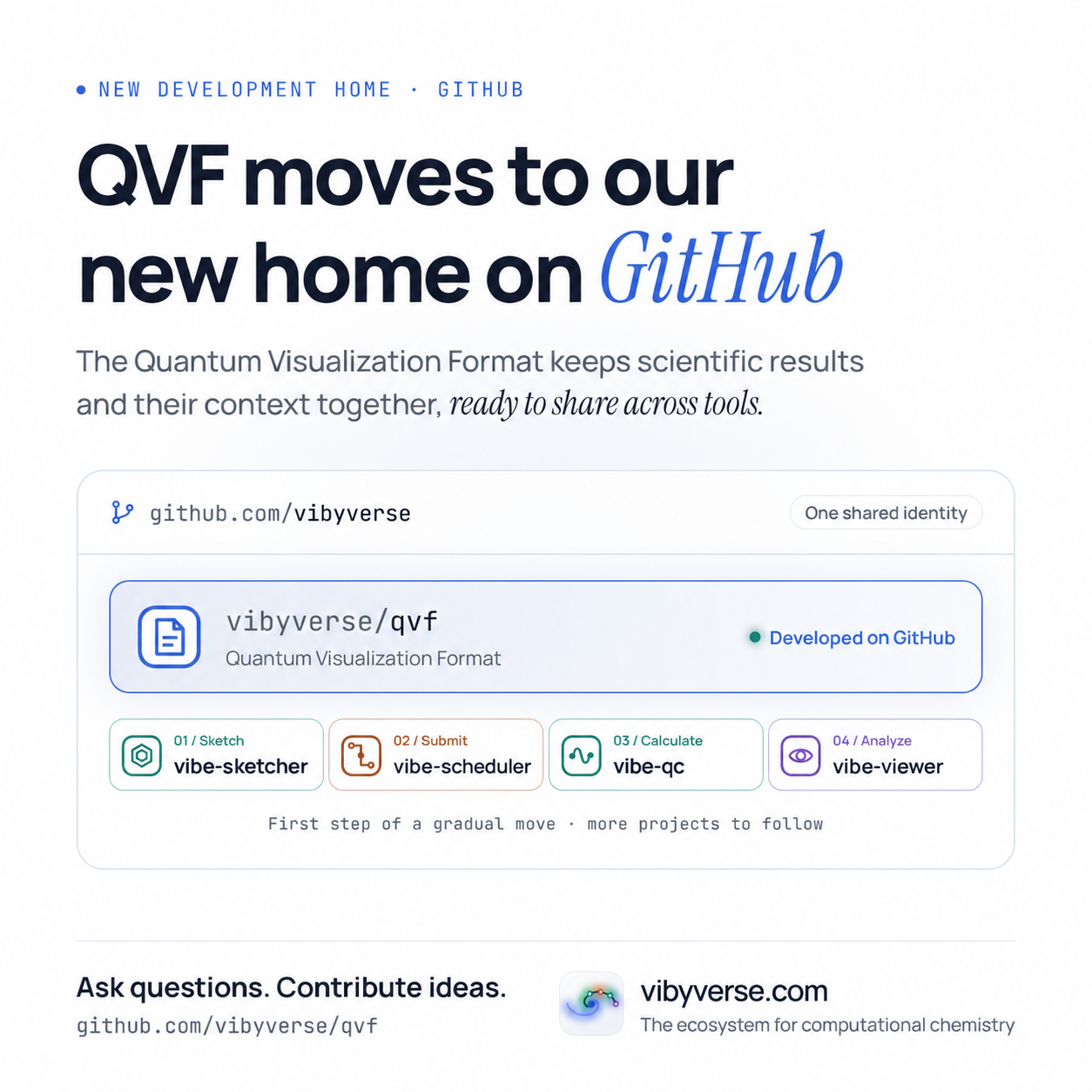
Our GitHub organization is now called vibyverse. QVF, the Quantum Visualization Format, is the first project to move its development fully to GitHub.
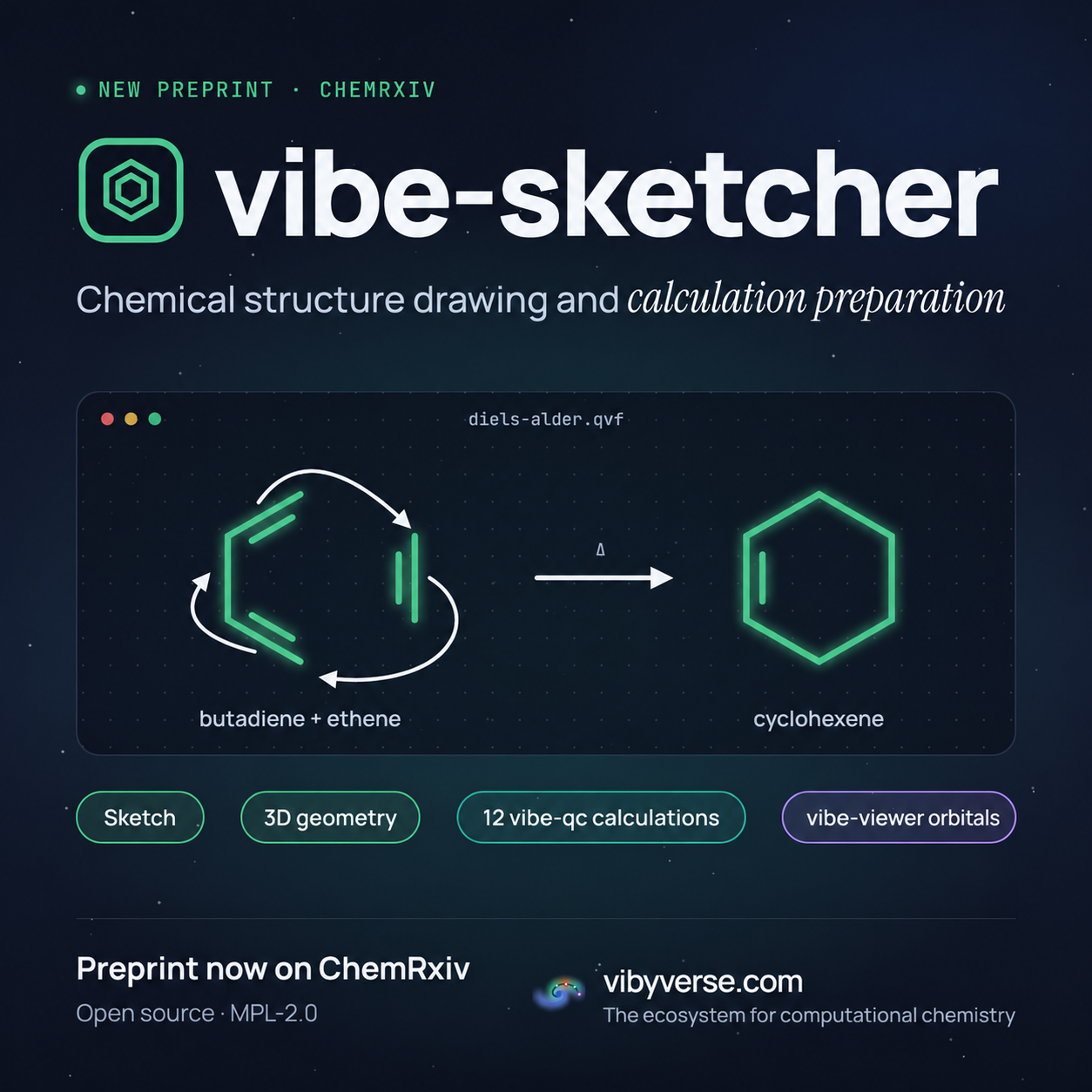
vibe-sketcher connects drawing, publication graphics and calculation preparation. The preprint is now on ChemRxiv.
vibyverse brings together five open-source projects for computational chemistry.
Meet QVF, the shared container that keeps a calculation’s data and context together.
A tour of the tools behind drawing, calculating, running, and exploring chemistry.