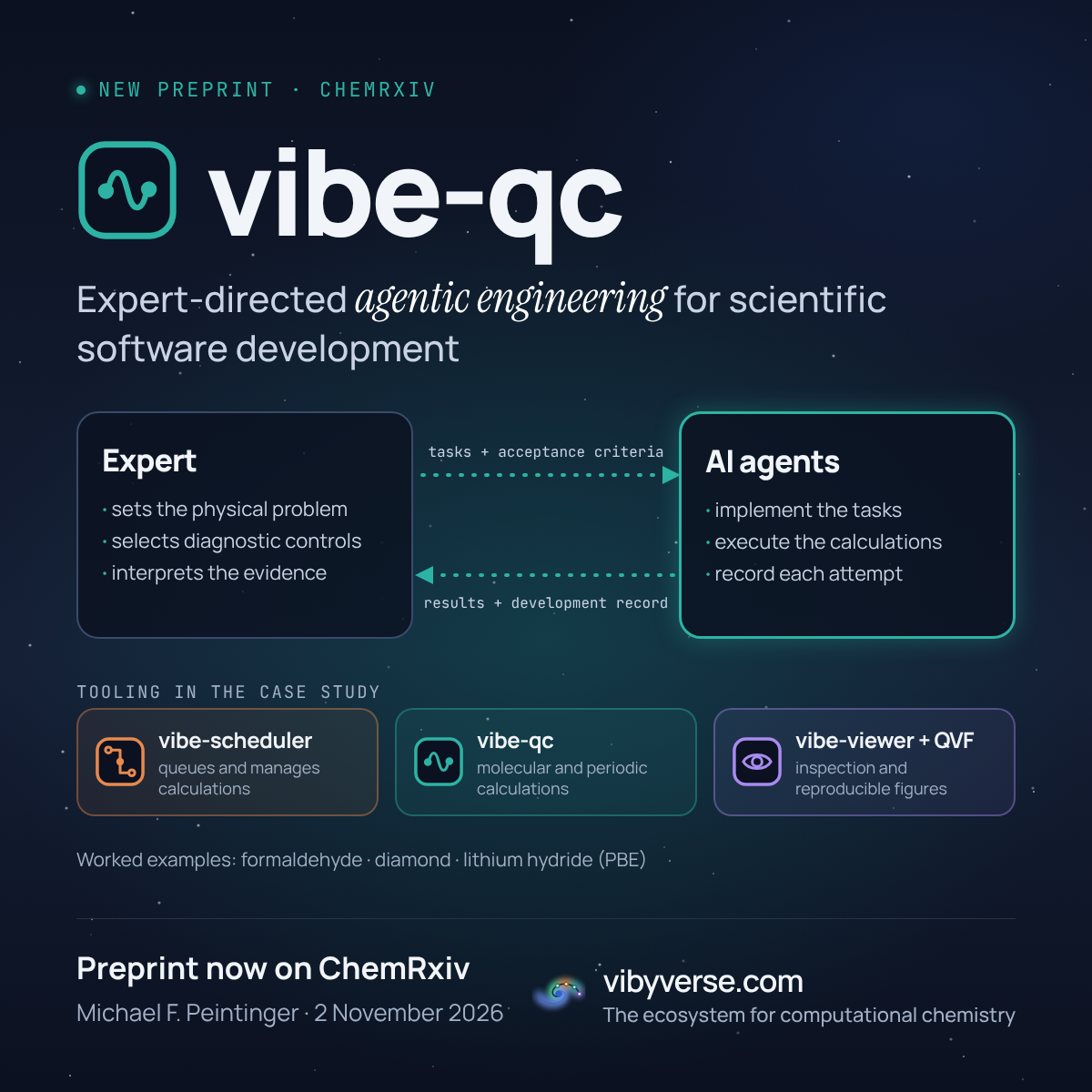
Generative AI can implement scientific software, but useful development also needs executable comparisons, inspectable results and a record of scientific decisions. Our new preprint on how we work this way, “vibe-qc: expert-directed agentic engineering for scientific software development”, is now on ChemRxiv.
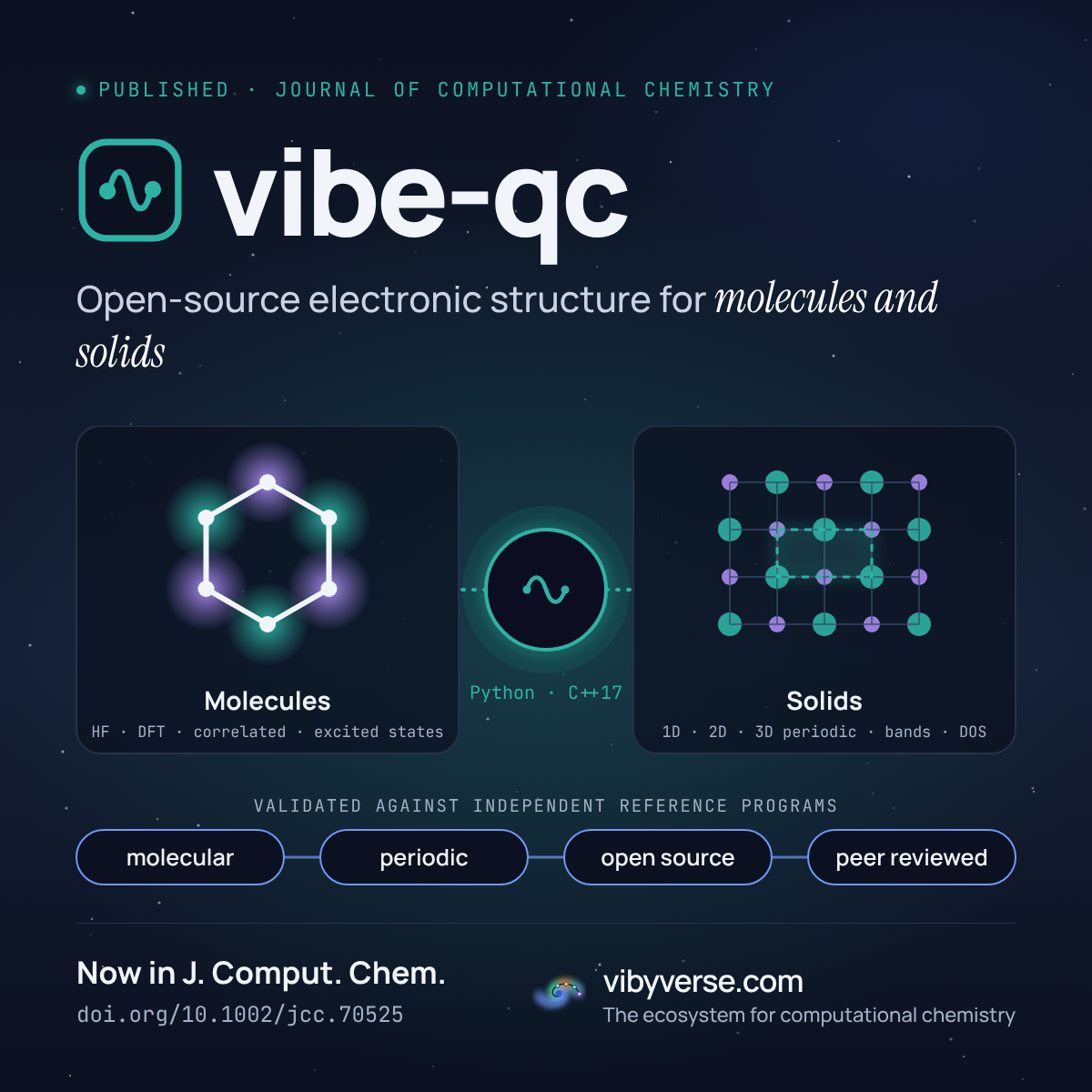
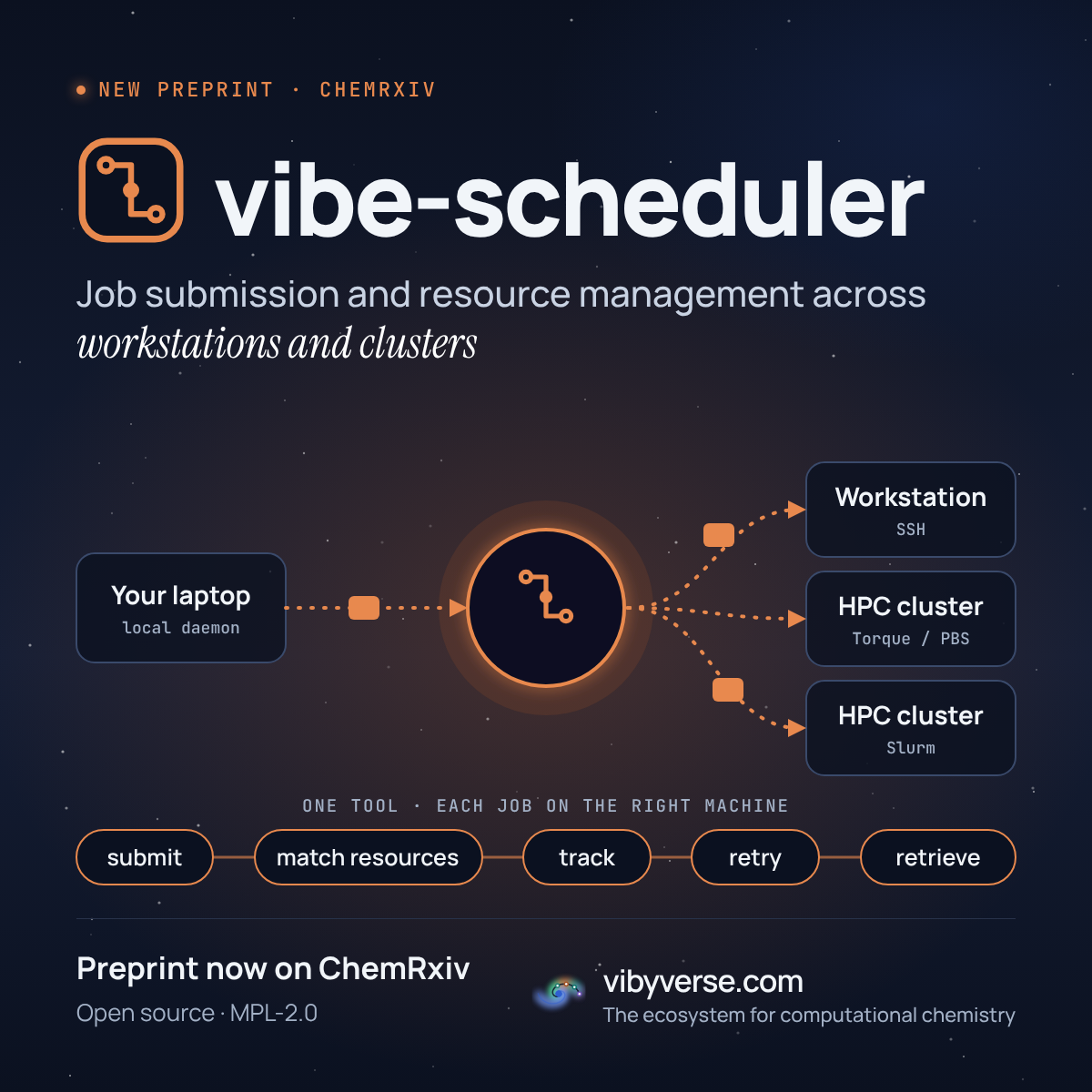
vibe-qc is the first general-purpose quantum chemistry program developed with generative AI. Development started at the end of April 2026. The case study looks at the tooling that made this possible: vibe-qc runs the molecular and periodic calculations, vibe-scheduler manages them across clusters and workstations, and vibe-viewer with QVF turns the outputs into portable inspection and reproducible figures.
The expert sets the physical problem, selects diagnostic controls and interprets the evidence. AI agents implement and execute those tasks. The retained development records keep failed attempts and separate changes in physical conventions from implementation errors. Formaldehyde, diamond and lithium hydride serve as worked examples.
The paper does not claim autonomous scientific judgment or a measured productivity gain. It describes a traceable process within one project.